

Sleeper sectionals and storage chaises: how they work and what to measure
How a pull-out bed comes out, how far the open bed reaches into the room, what a storage chaise holds and when a futon suits you better.
A sleeper sectional does two jobs in one footprint. By day it is the sofa in your living room, and on the nights a friend stays over it becomes the spare bed you do not have room for. Add a storage chaise and the same piece holds the pillows and sheets that bed needs. The trick is knowing three things: how the bed comes out, how much floor it takes once open and what the storage really holds. All three are easy to guess wrong from a photograph of a sofa with its cushions in place. Pull-out sectionals, storage chaises, futons and small sleeper chairs all sit in the the ERYE living-room line range, and each one asks something different of your room.
How the pull-out bed works
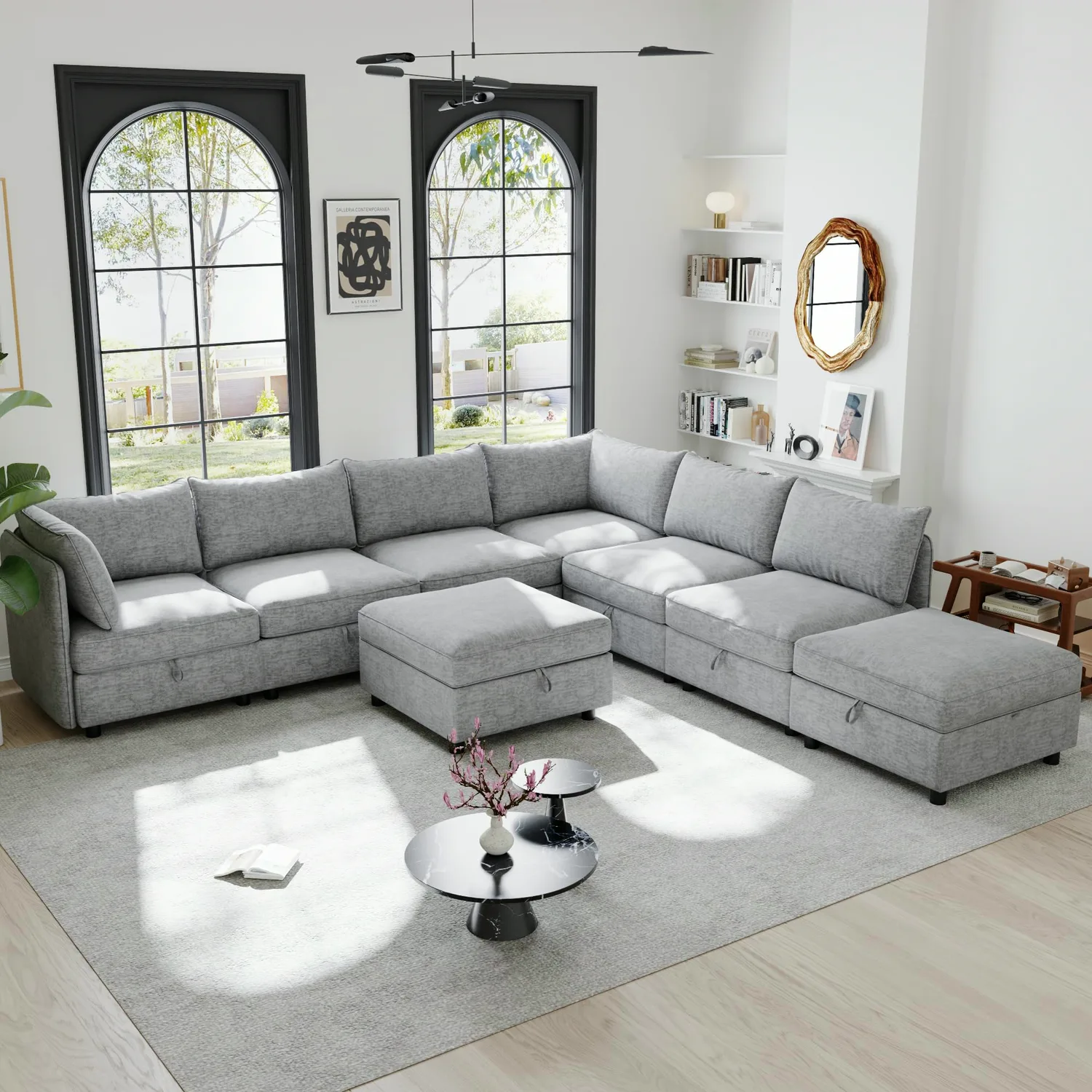
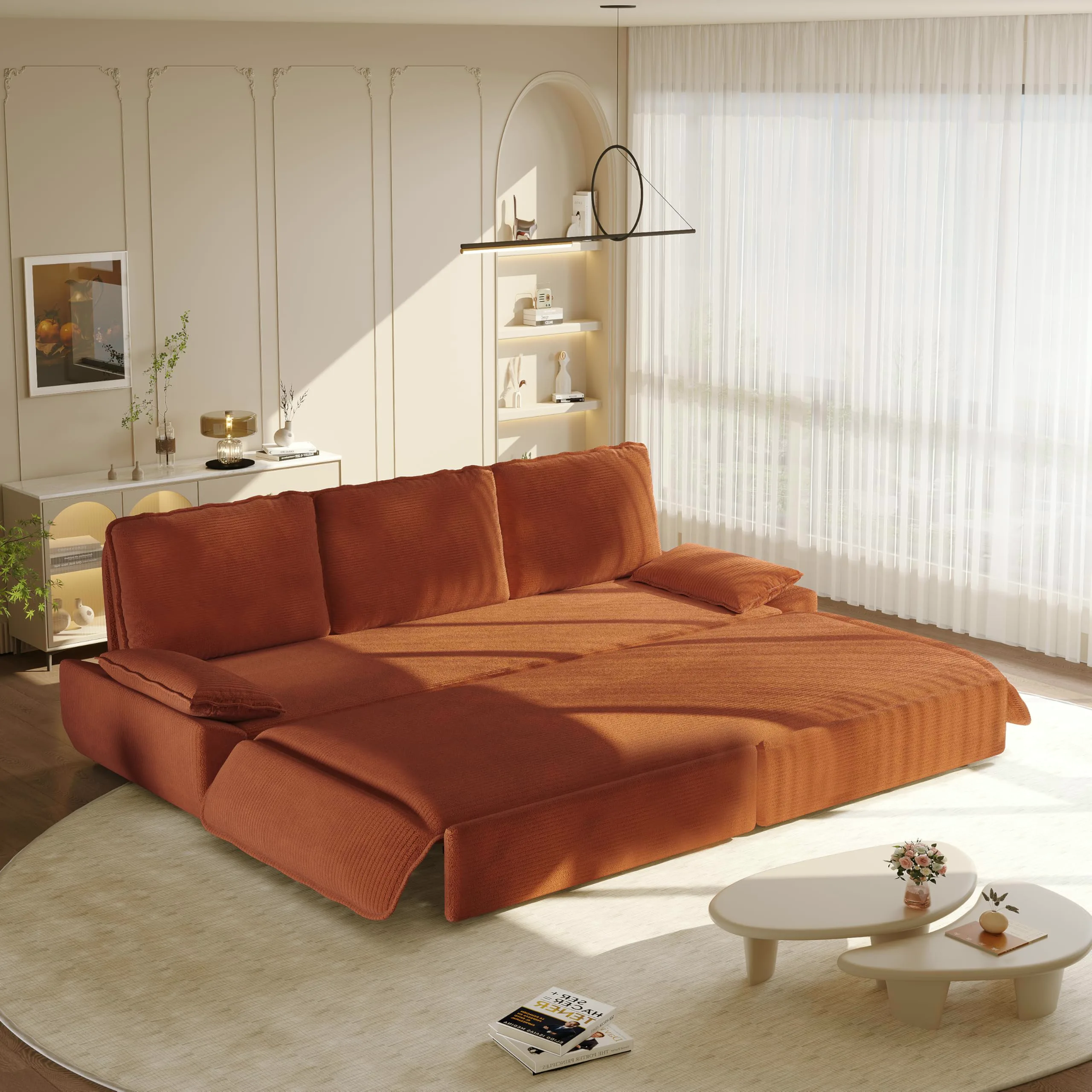
On most of our sleeper sectionals the bed lives under the seat. A frame waits inside the base, and you draw it forward into the room. The chenille U-shaped sleeper sectional has a strap handle built into the pull-out section, and the corduroy U-shaped sleeper sectional pulls out and pushes back in by straps as well. On the compact chenille sleeper sectional, the base slides out like a drawer, with a handle at the front and pulleys underneath to carry the weight across the floor.
Not every seat of a sectional turns into a bed. The 117.5-inch corduroy U-shaped sleeper sectional is built from four parts: a chaise, a love seat, a corner seat and an armless love seat. Only the armless section holds the pull-out bed. Everything else in the U stays a sofa around it. Some pieces stop halfway: our corduroy sleeper sofa has two length settings, so its frame pulled partway out makes a chaise and pulled all the way out makes a bed.
Because the frame travels across the floor, the path in front of the sofa has to be clear. A thick rug edge, a coffee table leg or a toy basket will stop it. Keep that strip of floor free, or know where each item goes on the nights the bed comes out. Try the mechanism once before your first guest arrives. Pull the bed all the way out, see that it clears the rug and the table, then push it home. That way the first real attempt does not happen late at night with a tired visitor waiting.
Measure the bed open, not closed
The number that matters most on a sleeper is one a sofa photograph never shows: how far the open bed reaches in front. Our L-shaped sleeper sectional makes the point. In its 81.5-inch build it is 31.1 inches deep as a sofa and 86.5 inches deep with the bed frame unfolded. The boucle sleeper sofa, 78.74 inches wide and 35.43 deep when folded, opens to a sleeping area of 78.74 by 78.74 inches. In both cases the bed claims most of the floor that the coffee table and the walkway were using a minute earlier.
Measure from the wall behind the sofa to where the foot of the open bed will land, then keep going. Leave room to walk past the foot of the bed, and room at one side at least for a guest to get in without climbing over the arm. Mark the open bed on the floor with painter's tape next to the outline of the closed sofa, and the gap between the two lines shows exactly what has to move.
Then decide where the coffee table goes on those nights. A light table that lifts into a corner is one answer. Side tables that slide against the wall are another. When the table is heavy and has nowhere to go, every guest visit turns into furniture moving, the very job a sleeper was supposed to save.
Storage chaises and lift-top ottomans
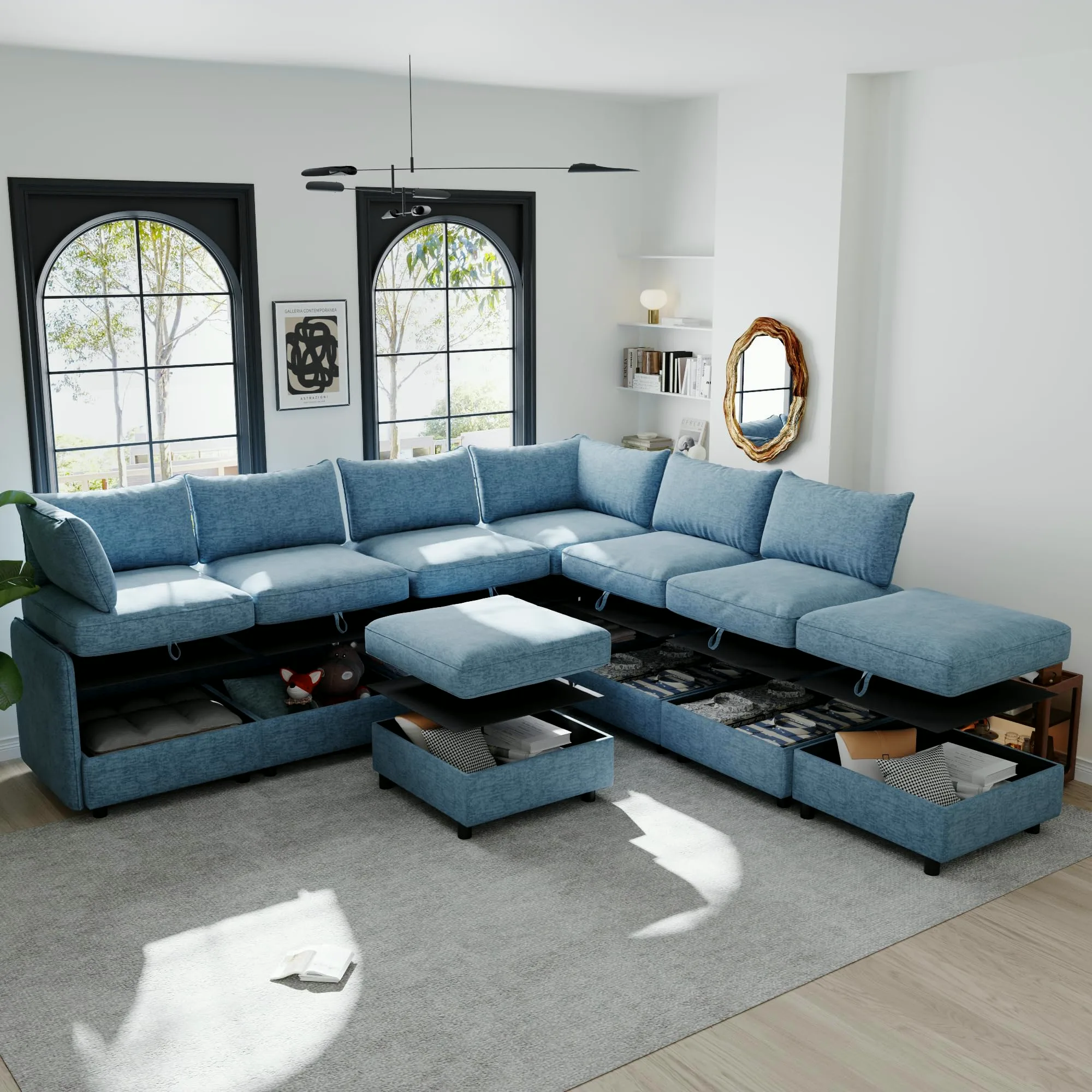
Storage on a sectional usually hides in one of two places: under the chaise or inside an ottoman. On the chenille U-shaped sleeper sectional, the chaise seat lifts up to open a compartment for blankets, pillows or seasonal clothes. The 122-inch corduroy U-shaped sleeper sectional carries a right-facing storage chaise. On the L-shaped sleeper sectional the storage chaise moves from the left side to the right, so it follows your room rather than fixing it.
Ottomans with storage do the same job in a smaller box. Our chenille L-shaped sectional comes with a storage ottoman you can use as a footrest, an extra seat or a place for throws. The 102-inch chenille L-shaped sectional has one meant for blankets and magazines. Because an ottoman moves, it can sit at the chaise end one week and beside a chair the next.
Put the guest bedding in the storage closest to the bed. When the pull-out opens in front of a storage chaise, sheets and pillows are an arm's reach away, and nobody carries a stack of linen through the house at midnight. One habit helps with any lift-up lid: clear the cushions and the tray off the top before you open it, since a seat lid only rises with nobody sitting on it.
Cup holders, USB ports and power
Some of our sleeper pieces carry more than a bed. On the chenille U-shaped sleeper sectional you get two power sockets and two USB ports built in, plus a hidden compartment and a cup holder in each armrest. The compact chenille sleeper sectional puts two USB ports in the arm and adds cup holders. Our velvet sleeper sofa has a USB and Type-C charging port, a phone holder and side pockets for books.
These features matter most on a piece that doubles as a bed. A guest can charge a phone within reach of the pillow, and the remote and the glasses have somewhere to go that is not the floor. Before you order, read the features named on the product page of the exact piece you want, since they differ from one sleeper to the next.
A sofa with charging ports needs its own power from a wall outlet. Plan the cord before the sofa goes in: the National Institute on Aging advises keeping electrical cords near walls and out of walking paths. Behind a sectional that stands against a wall this is easy. A sectional floated in the middle of the room, with its back to a walkway, needs a cord cover or a different spot.
Futons and 3-in-1 sleeper chairs for small rooms
When the room cannot give up floor for a pull-out, a piece that folds flat in place is often the better answer. Our linen blend futon sofa bed is 75.39 inches wide. You remove the armrest and recline the back to make a bed, and the back also holds in three positions for sitting, leaning and lying flat at 180 degrees. Cup holders keep a drink off the floor, and a hidden compartment in the base stores the legs and hardware.
Sleeper chairs go smaller again. The velvet sleeper sofa works as an armchair, a lounge chair and a guest bed, with a back that sets at 110, 140 or 180 degrees. It comes in widths of 35.5 and 51 inches. At 43.7 inches, our velvet sleeper chair has a back that adjusts through six positions from 90 to 180 degrees and a pull-down bed that makes a single sleeping place. Its arm holds USB ports, hidden storage and cup holders, with a side table that rotates a full 360 degrees.
These pieces suit a studio, a dorm room or a home office that becomes a guest room a few nights a year. The compact chenille sleeper sectional belongs with them at 61.42 inches wide, with a back that sets at 35, 70 and 180 degrees. Width is the whole argument for them: a single chair can host a guest where a sectional would fill the room.
Choosing between them
Start with how often the bed will open. With guests every few weeks, a sleeper sectional earns its place, since it is a full sofa on all the other nights and the bed is always there. For a guest twice a year, a futon or a sleeper chair may give you more room every day in exchange for a smaller bed on the rare night.
Then look at the floor in front. If you can tape out the open bed and still walk past its foot, a pull-out sectional fits your life. When the tape runs into the far wall, look at the futon and the chairs, or at a modular cloud couch whose pieces can be pushed together flat. Several of our cloud couches double as sleepers for that reason. Storage can settle a close call too. If your home is short on closets, let the chaise hold the guest bedding. A spare room's worth of linen then lives in the living room, out of sight until the bed comes out.
A sleeper sectional also stays a sectional. Every size rule for sofas applies to it, from walkways to the coffee table gap, and our sectional size guide covers them one by one.
Finally, think about the delivery. A pull-out frame makes a sleeper sectional heavier and stiffer than a cloud couch of the same width, and its cartons have to turn every corner on the way in. Our delivery measuring guide walks through doors, stairs and elevators, and the full sleeper shelf sets every sleeper sectional, sofa bed and futon in our catalog side by side.
| Type | Overall width | Overall depth | Storage built in |
|---|---|---|---|
| Sleeper sectionals | 51 to 122 in | 34.3 to 95.6 in | 29 of 30 styles |
| Sleeper sofas and chairs | 35.5 to 106.5 in | 28 to 78.5 in | 5 of 18 styles |
| Futon sofa beds | 68 to 75.4 in | 29.3 to 33.3 in | none |
