
Power recliner or lift chair: how the two work and how to choose
Recline positions, what a lift base does, what each motor moves, heat and massage, the floor a chair needs and care around children.
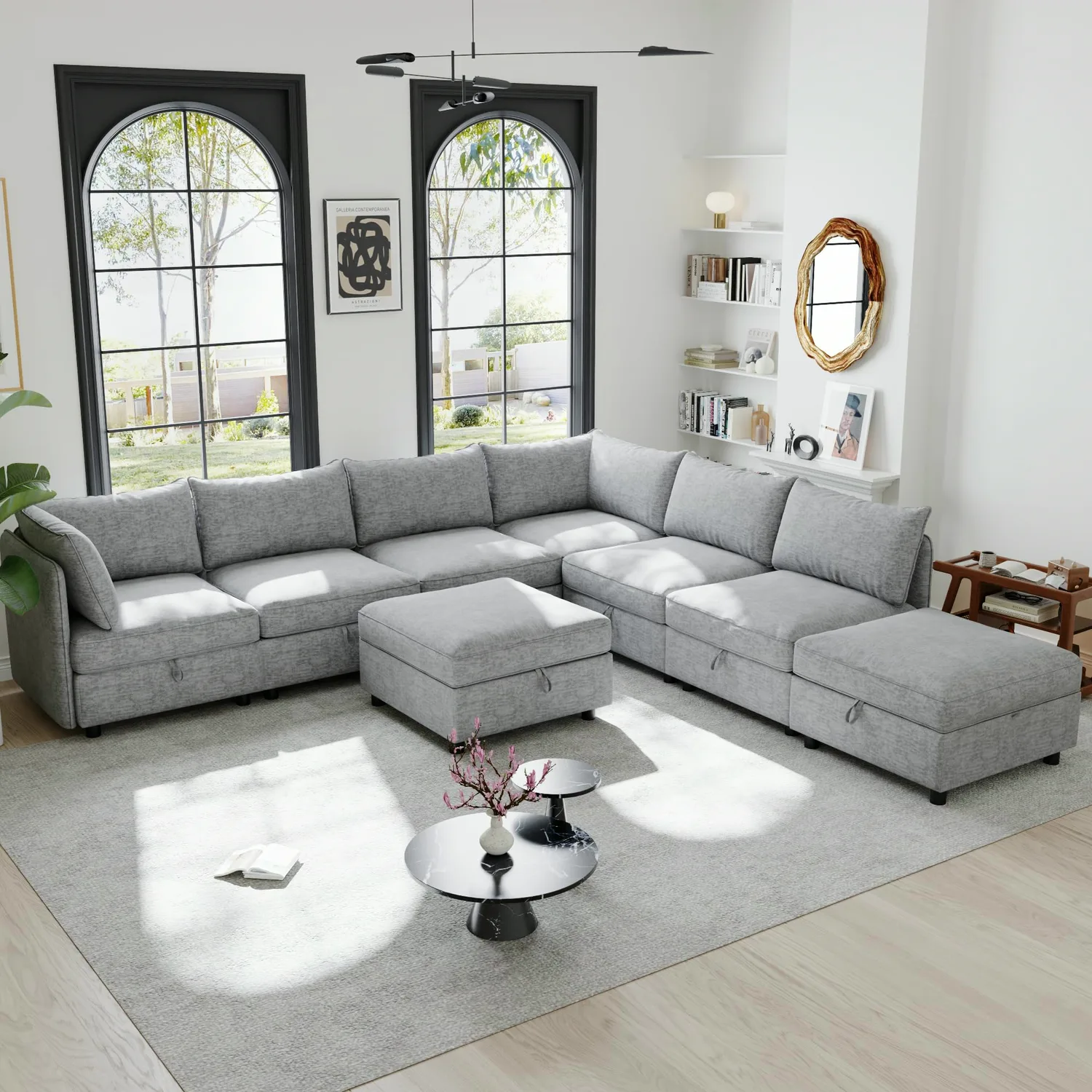
Both lean back at the press of a button, both raise a footrest, and in a photograph they can pass for twins. The difference sits under the seat. A power recliner moves the back and the footrest while the seat stays where it is. Add a powered base and you have a lift chair, which does all of that and can also raise the whole seat and tilt it forward, so you finish close to standing before your feet take your weight. Which one belongs in your living room depends on how you use the chair, the floor around it and who else shares the room. The the ERYE family of pieces range has both: power lift recliners, and sectionals with power reclining seats.
What a lift chair does that a recliner does not
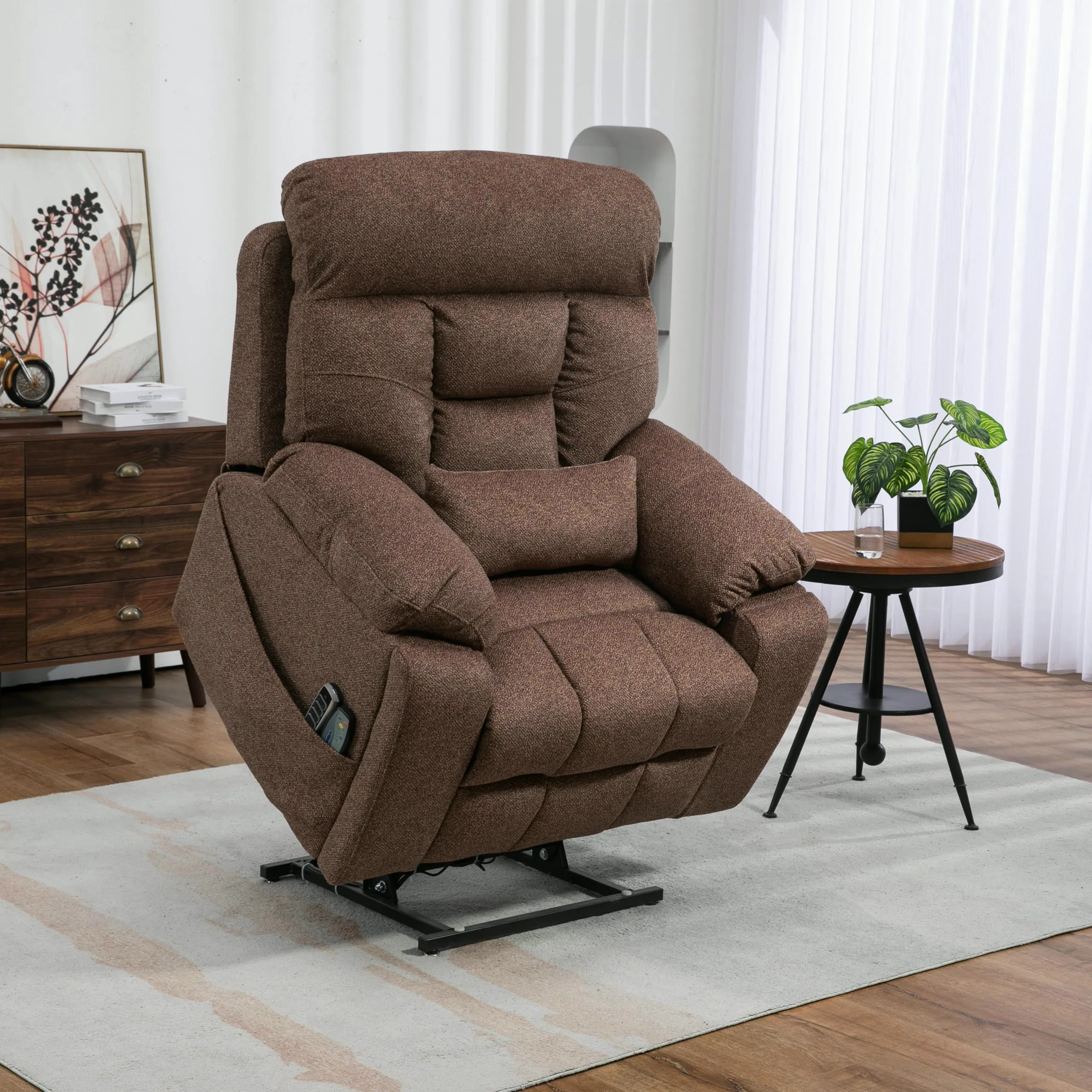
A lift chair sits on a powered base. Press the up button and the base pushes the seat upward and tips it forward, bringing the front edge down toward the floor. Your feet reach the ground while you are still seated, and the last part of standing starts from a higher, forward-tilted seat instead of a low, soft one. To sit down, the chair runs the other way: raise the seat to meet you, sit, then lower it back into place. The seat does the traveling, and you finish the move on your own feet.
A power recliner has no lift. Its seat keeps the same height, and the motor only changes the angle of the back and the position of the footrest. Our faux leather L-shaped power reclining sectional works this way. A button on the side sends the footrest out, and the headrest section of the back sets in five positions, with a USB port in the arm for a phone.
So the question to ask is simple. If you mainly want to lean back and lift your feet, a power recliner does it. For a chair that also takes on part of the work of getting up, look at a lift chair. Our lift chairs, the 4-motor power lift recliner, the chenille power lift recliner and the velvet power lift recliner, recline as well as lift.
Positions: 2-position, 3-position, infinite and lay-flat
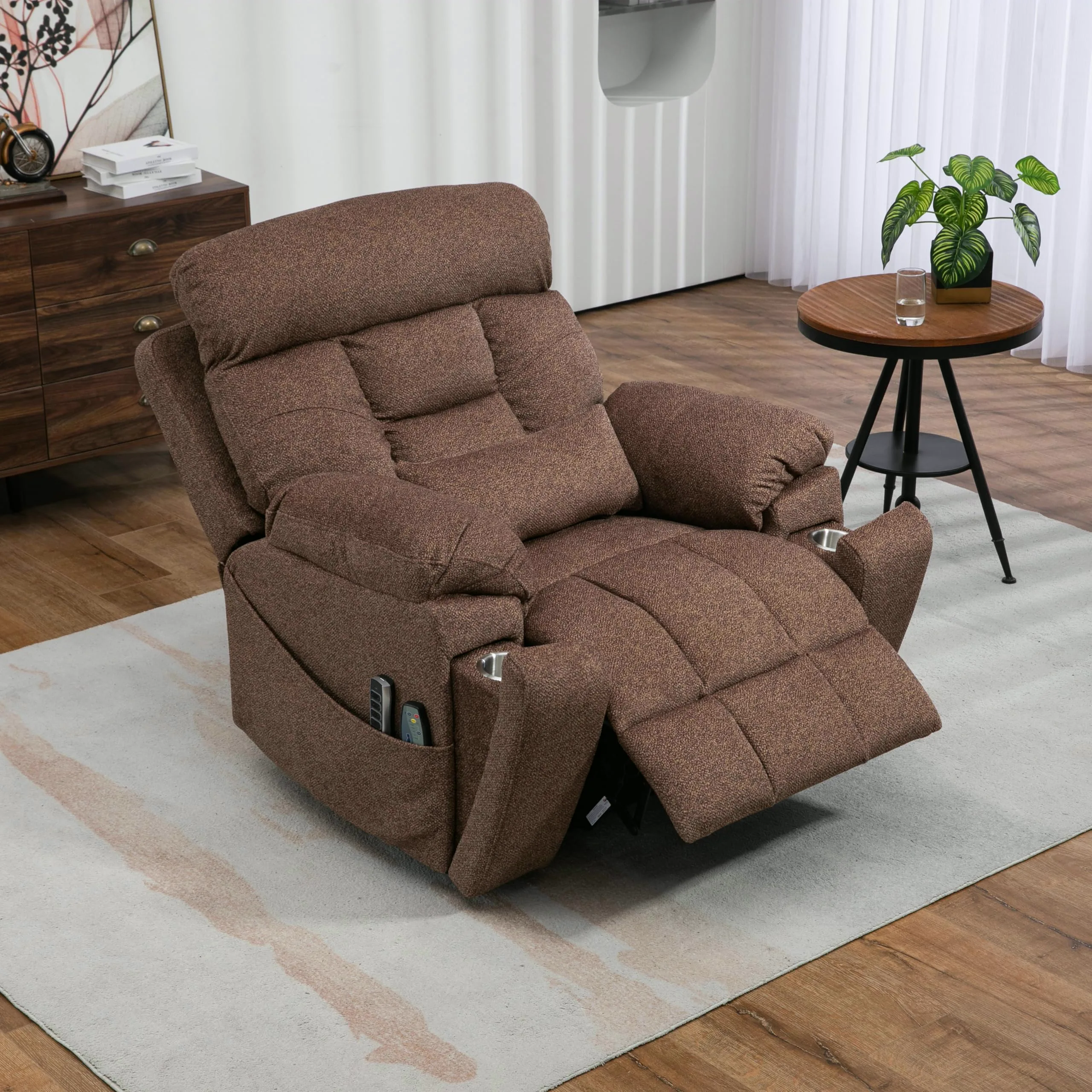
Spec sheets describe reclining in positions, and the terms mean something specific. A 2-position recliner has two stops: upright, and leaned back with the footrest up. Add a middle stop and you have a 3-position recliner, usually with the footrest raised and the back only slightly tilted, a common angle for television. Infinite position means the back and footrest keep moving while you hold the button and stop wherever you let go, so any angle between upright and full recline is yours.
Lay-flat is the far end of that travel. The back goes down until it lines up with the footrest at 180 degrees, flat enough to nap on. Each of our lift chairs reclines to 180 degrees. On the 4-motor chair, the full length at that point is 74 inches. That figure is the floor the chair covers when laid out, from the top of the back to the end of the footrest.
Not every seat needs the full range. Reading and conversation rarely take a chair past the first few degrees of recline. Movies call for the middle position. For naps, and for anyone who likes to sleep in a chair, lay-flat is the reason to buy. Think about the hours you will actually spend in it, then match the positions to those hours rather than to the longest list on the page.

Motors and what each one moves
The number of motors tells you how many parts of the chair move on their own. With more motors, more parts can be set independently, and the hand control gets more buttons to match.
Our chenille power lift recliner uses two motors, and they move the backrest and the footrest separately. That split is more useful than it sounds. You can raise your legs while sitting upright to read, or lean the back while keeping your feet on the floor, instead of accepting one fixed combination of the two. The chair also carries a cup holder, a fold-out side table and a wireless charging pad for a phone.
On the 4-motor power lift recliner, each of four parts has its own motor: the backrest, the headrest, the lumbar section of the back and the footplate. A separate headrest motor moves the head section, so you can bring your head up toward a screen or a book while the rest of the chair stays leaned far back. Lumbar adjustment gets a motor of its own too, and it moves the lower part of the back by itself. The backrest and footplate work as they do on the two-motor chair, and the four together are how the chair gets from upright to fully flat without a single fixed path.
More motors do not make a chair better for everyone. They make it more adjustable, which suits people who fiddle until a position feels right and who share the chair with someone of a different height. If you tend to use one position every evening, two motors cover it with fewer buttons to learn. Whichever you choose, get to know the hand control before the first long evening. Learn which button lowers the footrest, since that is the one to press with care.
Heat and massage are features
Our lift chairs add heat and massage, and it helps to know what each one describes. Massage in chairs like these means vibration from points set into the chair, with modes that change the pattern and the rhythm. Heat means warmth at the lower back. Both are comfort features, the same way a cup holder is a convenience feature.
Details vary by chair. The 4-motor power lift recliner has five massage modes and heat aimed at the lumbar area. On the chenille power lift recliner you get an eight-point massage with five modes and two intensities, high and low, plus heat. Its timer switches the massage off after 15, 30 or 60 minutes, so a chair left running after someone dozes off stops on its own.
Think of these features as a matter of taste. Some people use the heat every winter evening and never touch the massage. Others find vibration distracting while they read and switch it off for good. If you are unsure, a chair that has them asks nothing of you in daily use, since you decide when to switch them on. Read the product page for each chair, because modes and zones differ from model to model, and pick the set you will actually use.
Room, wall and weight capacity
A reclining chair needs floor in two directions: behind, where the back travels as it leans, and in front, where the footrest lands. Measure both before you choose a spot. Our 4-motor chair is 38.19 inches deep sitting upright and 74 inches long laid flat, so the difference between those two figures has to fit somewhere between the wall and whatever stands in front. The chenille chair lists a footrest length of 18.9 inches, which is the stretch of floor that footrest needs clear.
The simplest test happens at home. Set the chair a little away from the wall, run it through full recline and full lift with a tape measure in hand, and only then push it back to its final spot. Keep side tables, baskets and the dog bed out of the footrest's path. A lift chair also plugs into a wall outlet, and the National Institute on Aging suggests running electrical cords along walls, away from the places people walk. Lead the cord behind the chair and along the baseboard rather than across the floor.
| Chair | Overall width | Seat height | Weight capacity |
|---|---|---|---|
| 4-motor power lift recliner | 40.94 inches | 19.5 inches | 400 lb |
| Chenille power lift recliner | 37.4 inches | 20.9 inches | 350 lb |
| Velvet power lift recliner | 36.25 inches | 18.91 inches | 300 lb |
Weight capacity is the load each chair is rated to carry, and it belongs on your list next to the width. The 4-motor chair also lists a seat 25.5 inches wide. Read capacity as a limit on the chair, not a target, and pick the one whose figure sits above the heaviest person who will use it.
Children, pets and the mechanism
Every power recliner and lift chair has moving parts under the seat and behind the footrest, and those parts need a little care when small children live in the house or visit. CPSC staff have described young children caught in the mechanism beneath home recliners and under footrests as they were lowered. In one case, an older child playing with the buttons closed the footrest of a motorized recliner on an infant. The same staff noted that a raised footrest opens more places under the chair where a small child can be caught.
The care that follows is simple. Keep small children off the chair's footrest and away from the mechanism, and do not let them climb on the chair or play under it. Before you lower the footrest or bring the seat down, check under and behind the chair, every time. Keep the hand control where a child cannot pick it up and press it, and switch off or unplug the chair when it stands in a room children use unsupervised.
The same look underneath is worth making for pets. A cat that naps in the warm space under a raised footrest is easy to miss. At ERYE we would rather you build the habit on the first evening than learn it later, and it takes only a second. The full lift chairs and recliners shelf sets our chairs side by side when you are ready to compare them.
